

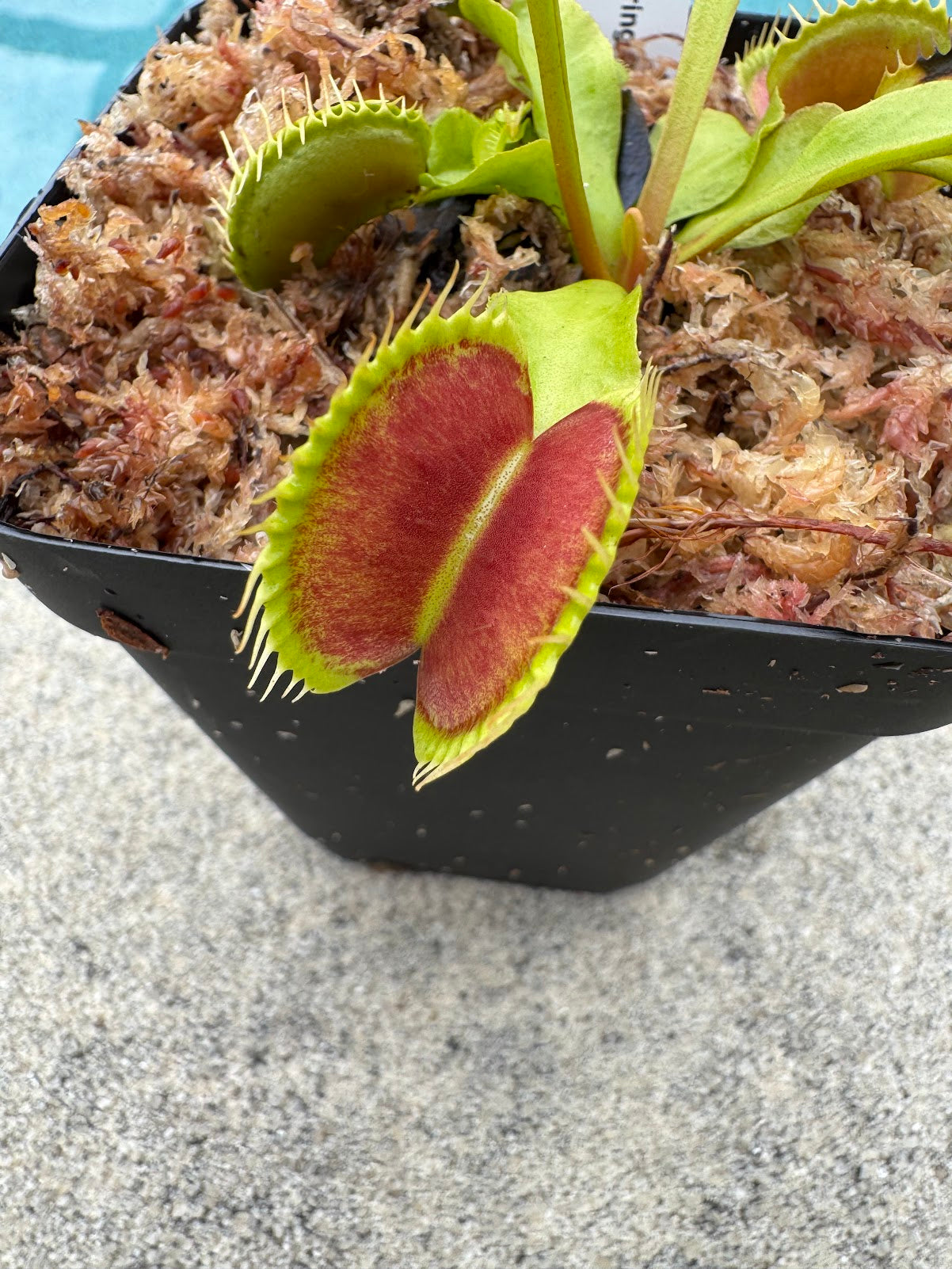
Venus Flytrap (Dionaea Muscipula) 'Towering Giant' in a 3.5" pot
Venus Flytrap (Dionaea Muscipula) 'Towering Giant' in a 3.5" pot
Couldn't load pickup availability
Dionaea Muscipula 'Towering Giant' is a remarkable Venus flytrap cultivar highly prized for its exceptionally tall, upright petioles (leaves) that lift its traps high into the air. This distinct growth habit gives the plant a stunning and unique look compared to low-growing varieties. Originally selected for its vigorous vertical growth, 'Towering Giant' produces robust traps that develop deep crimson interiors when grown under intense, direct sunlight. Its dramatic stature and reliable vigor make it a fascinating centerpiece for collectors looking to add vertical diversity to their flytrap display.
These come pre-potted in sphagnum moss in a 3.5" pot.
Share


Care Instructions
Light
Venus Flytraps love full sun and will generally not do well long-term indoors without an additional grow light. At minimum we recommend 6 hours of sunlight a day. To grow indoors we highly recommend this guide.
Water
- Must be constantly wet (sitting in a tray of water – 1-inch or so is good).
- Only use distilled, rain, or reverse osmosis water. Do not use purified water. Any water with > 50 PPM TDS will kill your plant over time. Filtered water is often not filtered enough for these plants.
Temperature
These plants do very well outdoors with warmer weather and are native to the Carolina’s. They also will enter a dormancy period where much of the plant will die back or slow in growth in the winter. These can stay outside during a freeze or cold weather. Humidity should be 50%+.
Fertilizer
Fertilizer isn't required, but can help with growth and developing larger traps. Fertilize in the evening every 2 weeks with ¼ teaspoon of MaxSea 16-16-16 mixed with 1-gallon of water. Spray the leaves. As for food, they get their food from live food sources and need movement or stimulation in each of the traps to actually begin the process of digestion. You can feed live bugs, but generally they will catch what they attract.
Plant was nicely packaged and looks healthy
Pleased with purchase
They were packaged so carefully and looked absolutely beautiful! Thank you! I will definitely order from him again.
I have placed several orders with Mike and always have a positive experience. Great quality, good communication and care of packaging and shipping is the best in the Market.
Loved it. Very healthy. Expertly packaged. you can put it on a table.
Excellent and secured shipping, the plant was in perfect condition. Healthy and hydrated. I couldnt be happier with my experience and will buy from Mike's again!